

Form Milling: Everything You Need To Know
We're a parts manufacturer, and if you've ever worked in manufacturing, you've probably heard of form milling. In the day-to-day machining of metal parts, each part is so complex that almost every fabricator has a milling machine on their shop floor, and the use of milling machines in fabrication is so high in popularity that you can't help but notice the popularity of them. In this article, you will join us to learn what milling is, the process, applications, working principle and its advantages and disadvantages or a comparison with other milling. Get to know the techniques of milling together!
What is Forming Milling? Definition and basic principles
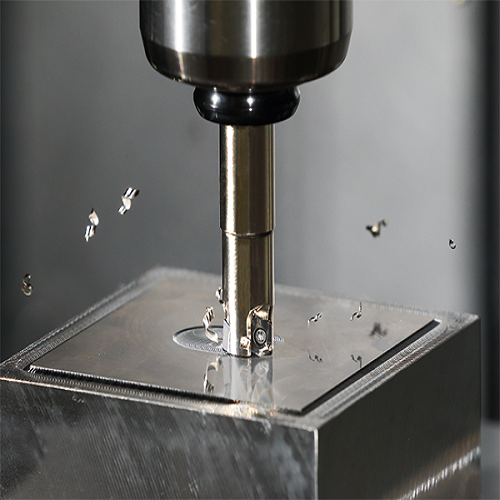
Forming Milling - A type of metal machining that uses a specially shaped milling cutter to machine complex contours. It is characterized by the ability to precisely replicate the shape of the cutter, and unlike traditional milling, you can understand it like this.
It's like making cookies in a mold: whereas normal milling is equivalent to cutting the shape a little bit with a knife, form milling is like pressing the target shape directly out of a mold.
It is suitable for complex shapes: gears, threads, turbine blades, etc., which do not need to be carved step-by-step, but are formed in a single pass with a specialized tool.
Forming milling is currently a very important field for batch machining, where the shape of each workpiece can be exactly the same. Compared to CNC layer-by-layer milling, form milling enables the machining of specific shapes much faster.
The core principle of form milling is to use a form milling cutter that matches the target contour, and through the rotary motion of the milling machine, the shape of the cutter is transferred directly to the workpiece, realizing high-precision contour machining.
The technical principle relies mainly on the specific shape of the forming milling cutter, which is transferred to the workpiece by the rotary + feed movement of the milling machine, to realize high-precision and highly repeatable contour machining. It is suitable for batch machining of complex workpieces such as gears, molds, turbine blades, etc., and is an important machining method in modern manufacturing.
Differences and Uses of Forming Milling and Conventional Milling
As mentioned above, by two simple molding movements. Forming milling is like trying to prepare a mold to directly press out a desired shape.
Traditional milling is generally used plane milling cutter or end mill for cutting, the movement of the tool and the cutting surface of the workpiece is usually parallel or have a certain angle, only suitable for processing flat or simple geometric shapes. It is not suitable for complex surface machining and is relatively single.
General traditional milling processing is a plane, slot, keyway, hole and other simple shape of the workpiece.
While molding milling processing gears, spiral contour, curved surfaces, etc., and mass production of the same product speed is very fast.
Advantages of Forming Milling

Complex processing can be accomplished with a single cut, eliminating the need for multiple adjustments and improving work efficiency.
The shape of the tool is fixed at the beginning, so it is suitable for mass production of high-precision workpieces.
The surface finish is relatively high, and there is little need for subsequent reworking.
Compared to contour interpolation in CNC machining, form milling can directly use the contour of the tool for machining, reducing complex path calculations and program writing.
Disadvantages of Profile Milling
High tool cost, because it is necessary to use a specific shape of the tool, the tool manufacturing cost is high, and it is only applicable to the machining of specific workpieces.
Since the machining process wears out from time to time, thus changing the shape of the contour, it needs to be serviced regularly, otherwise the machining accuracy will be affected.
Forming tools require a high degree of precision in their design and manufacture, involving factors such as contour compensation, cutting angle, chip removal design, etc., and demand high competence from tool manufacturers.
The contact area of one cutting is relatively large, which will produce a large amount of chips, and the design of chip removal is also very important.
Application areas for form milling range from aerospace to automotive manufacturing.
Aerospace: machining of complex parts such as turbine blades, engine magazines, wing structures, etc., which require high precision and surface quality.
Mold manufacturing: injection molds, die-casting molds in the complex cavities and surfaces, forming milling can be a one-time completion of high-precision processing.
Automotive industry: engine block, crankshaft, transmission gears and other key components of the manufacturing, requires high precision and high efficiency of the processing process.
Energy field: gas turbine blades, complex parts in nuclear power equipment, also rely on form milling technology.
Common challenges and solutions for form milling
Tool wear: one of the most common reasons for molding milling, mainly due to the poor quality of the material, or processing quality requirements of the high wear caused by the fast, we here suggest that the tool material is used in alloy steel and other materials, and then timely replacement of the tool Oh.
Workpiece deformation: this situation generally occurs in the cutting of large workpieces, if the area is very large this side of the proposal can be segmented for cutting, or directly smaller tool.
Cutting temperature is high: this is the friction of the contact surface with the workpiece heat, in our point of view can be sprayed coolant while cutting, the workpiece to slow down the progress.
The future development trend of molding and milling technology
With the progress of intelligent manufacturing and digital technology, forming milling is also upgrading.
Intelligent machining: real-time monitoring of the machining process through sensors and AI technology to optimize cutting parameters and improve machining efficiency and quality.
Additive Manufacturing Combination: Combine forming milling with 3D printing technology to realize rapid manufacturing of complex parts.
Green Manufacturing: Develop more environmentally friendly cutting fluids and tool coatings to reduce environmental pollution during machining.
Forming milling may sound like a niche technology, but it is the best solution for geometries that are difficult to achieve with traditional milling. By combining customized tooling with CNC precision, it is possible to deliver high-quality parts to demanding industries-despite higher costs and technical barriers. Need to machine parts that can't be machined? Jeek has your back.