

What is Polishing?
Essentially, polishing is a process that uses mechanical, chemical, or electrochemical methods to smooth, brighten, and achieve a certain level of flatness on the surface of an object. The purpose is to remove surface flaws and rough layers, improve surface quality, and enhance the aesthetic appeal and performance of the object.
From a visual perspective, polishing means grinding the surface of a part to make it more attractive, eliminating waste material and defects generated during the manufacturing process.
How is Polishing Done?
At the beginning of polishing, the necessary tools and materials need to be prepared, such as polishing machines and sandpaper. The polishing machine is turned on to rotate at high speeds, creating friction with the part to grind it. Sandpaper is used manually to grind the surface, starting from coarse paper and progressing to finer grades.
Steps in Polishing Process:
Rough Processing: The first step is to perform rough processing on the part, aimed at removing the rough and uneven areas on the surface. This stage generally uses sandpaper or grinding wheels to reduce raised areas on the surface.
Fine Processing: After rough processing, finer polishing is carried out using more delicate tools, such as polishing cloths and polishing pastes. During this step, abrasives react with impurities on the surface, removing them and eliminating traces left by rough processing.
Brightening: The surface's brightness and whiteness are enhanced during this stage, where specialized bleaching agents are used to make the surface cleaner and whiter.
Coating: Finally, a protective coating is applied to the part to prevent external damage from dust, stains, ultraviolet light, etc., increasing both gloss and durability.
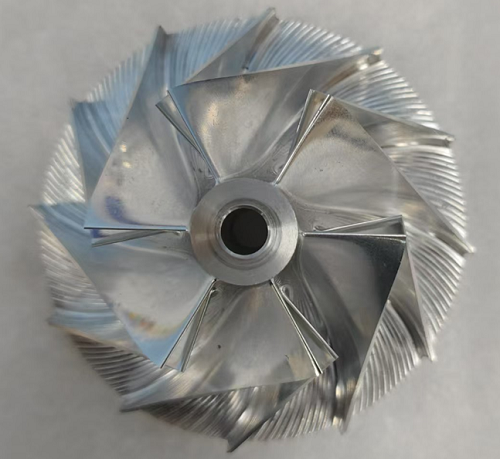
Different Methods of Polishing
One of the most common polishing methods, it uses mechanical force and abrasive particles' friction to remove surface imperfections. Typically, a rotating polishing wheel or polishing cloth is used, paired with abrasives like alumina or silicon carbide. During polishing, abrasive particles roll and cut on the material surface, gradually making it smooth.
Materials suitable for mechanical polishing include steel, copper, aluminum, and some non-metallic materials like glass and ceramics. However, the downside of mechanical polishing is that it may leave fine scratches on the material's surface, and complex-shaped parts are hard to polish thoroughly.
This method involves the corrosion and dissolution of the material surface using chemicals. Common chemical polishing liquids include nitric acid, phosphoric acid, and sulfuric acid.
Its advantage is that it can achieve a very smooth surface without leaving scratches like mechanical polishing. It is suitable for materials with very high surface quality requirements, such as stainless steel and aluminum alloys. However, it requires strict control of the solution's concentration, temperature, and time; otherwise, excessive corrosion may result in an uneven surface.
A method based on electrochemical principles, where the material to be polished is placed as an anode in an electrolytic bath containing specific electrolyte solutions. Direct current is passed through, causing the surface to undergo anodic dissolution, removing protrusions and defects to achieve polishing.
The advantage is that it achieves a very high level of smoothness and whiteness, and the polishing speed is fast. It is suitable for metal materials like high-alloy steel and titanium alloys. The downside is the need for specialized equipment and techniques, and safety precautions must be taken to avoid accidents such as electric shocks or electrolyte splashing.
This method uses high-frequency ultrasonic vibrations to drive abrasive particles to polish the material surface. An ultrasonic generator produces high-frequency vibrations, which are transmitted to the polishing tool, such as a polishing wheel or head, causing abrasive particles to vibrate and create friction on the material surface, removing surface flaws.
Parts with complex shapes or those difficult to polish with mechanical methods can be treated with ultrasonic polishing. It can achieve very high surface smoothness without damaging the material's surface. However, it also requires specialized equipment and techniques, and careful selection and handling of abrasives are necessary.
Fluid polishing uses high-speed flowing liquids or gases to scour and grind the material surface to achieve a polishing effect. Typically, high-pressure water jets or high-pressure gas jets are used to mix abrasives with the fluid to create high-speed streams that impact and polish the material surface.
The advantages of fluid polishing are many. It can remove various surface defects, including scratches and oxides, and is effective for polishing complex parts. It is commonly used in high-tech fields such as aerospace components, where surface quality is highly critical.
Above, we discussed four methods of part polishing. In practice, mechanical polishing is the most commonly used, as it is the simplest and is suitable for various precision parts.
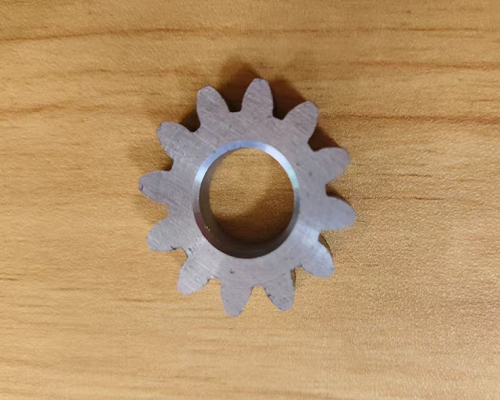
Difference Between Grinding and Polishing
Grinding involves using abrasives (like sandpaper or grinding wheels) to abrade the surface of an object, removing defects, burrs, and rough layers, making the surface relatively flat. The principle is using the sharp edges of the abrasives to perform physical cutting on the material's surface, changing its morphology.
Polishing, on the other hand, is a further step beyond grinding, where finer abrasives or polishing agents are used to achieve a higher level of smoothness and gloss through friction and chemical action. Polishing agents typically contain abrasives and lubricants, which reduce friction, prevent overheating, and avoid scratches, making the surface appear shiny.
From a cost perspective, grinding is cheaper, with simpler tools and materials, but it is less efficient, requiring multiple grinding stages. Polishing, however, is machine-based and is exactly the opposite!
Every part in the manufacturing process requires polishing, not only for aesthetics but also because it is necessary for the final product's quality. At Jeek, we have our own personnel and technology. We are number one in polishing details, and we look forward to working with you every time. If you need to make products, you can send us an email through our website, and we will respond as soon as we see it.